Understanding ozone machines: what they are and how they compare
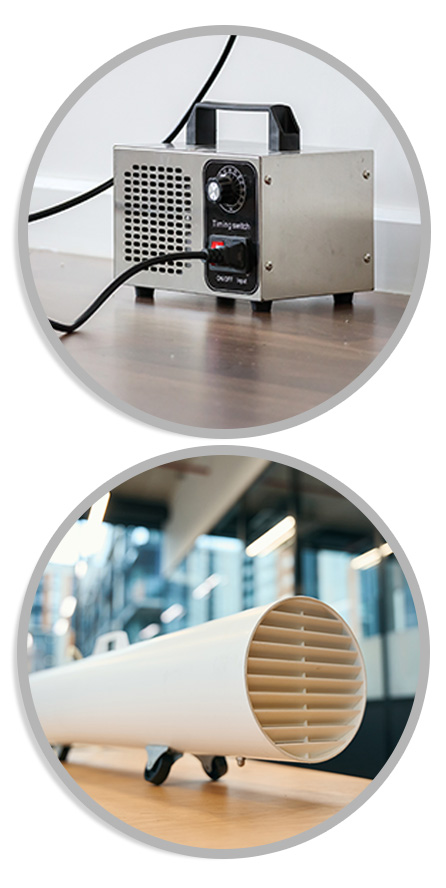
Search terms like “ozone machine” or “ozone generator” often return a wide range of devices, from high-output professional decontamination tools to small plug-in units marketed for odour control. With such diversity, it’s important to understand what ozone is, how these devices work, and where they’re appropriate.
What is ozone?
Ozone (O₃) is a reactive gas made up of three oxygen atoms. It forms naturally in the atmosphere and is commonly associated with the “fresh” smell after a lightning storm. Its reactivity makes it highly effective at breaking down bacteria, viruses, and odours, but also potentially harmful at high concentrations.
Ozone is sometimes referred to by alternative names such as activated oxygen, atomic oxygen, or triatomic oxygen, but these all refer to the same molecule.
How ozone machines work
Ozone machines (or ozone generators) deliberately produce O₃ using one of two primary methods:
• Corona discharge: mimics lightning to split oxygen molecules and form ozone
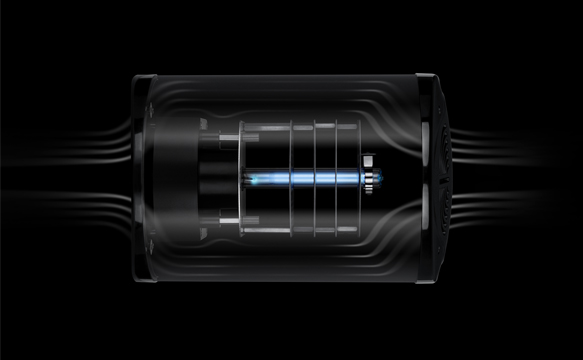
• Ultraviolet light (typically 185 nm): replicates sunlight’s effect on oxygen to generate ozone
Some high-output systems even use pure oxygen to increase the ozone yield.
High-output vs low-output ozone machines
It is important to separate these into two distinct categories:
🔴 High-output ozone generators (decontamination use)
• Typically generate 1,000–20,000+ mg/hr of ozone
• Designed to eliminate microorganisms and deep odours in unoccupied spaces only
• Require strict controls and re-entry protocols
• Often regulated and restricted in public use
High-output ozone systems and re-occupancy
While high-output ozone generators can significantly reduce odours and microorganisms, this benefit only applies to unoccupied spaces during treatment. Once people re-enter the area, new contaminants are introduced immediately, and there is no ongoing purification or protection. These systems may be suitable for occasional deep cleaning, but they do not offer continuous air quality control in real-world, occupied environments.
🟢 Low-output ozone generators (continuous odour control)
• Produce small amounts of ozone, often under safety thresholds for long-term exposure
• Aim to freshen air, not eliminate the cause of odours
• Generally considered safe when correctly specified and used, but often ineffective in high-contamination environments
• Commonly found in small domestic or commercial settings
Limitations of low-level ozone use
Despite marketing claims, low-level ozone generators:
• Aim to freshen air but offer no control over odour sources such as bacteria or VOCs
• Should not be relied upon for infection control
• Often provide only temporary relief without addressing the underlying cause
• Are best understood as odour-masking tools, not purifiers in any practical or regulatory sense
Are ozone machines safe?
Used correctly, ozone generators can be safe and effective. However, safety depends entirely on output levels and the context of use. High-output units must only be used in unoccupied areas and with full awareness of risks. Low-output systems are typically designed to stay within recognised exposure limits (e.g. 0.05 ppm for long-term exposure), but even these must be assessed carefully.
Misuse of unregulated devices, particularly those purchased online without proper guidance, is a concern, with some units exceeding safe ozone levels.
If microbial control is the goal
If microbial control is the goal, alternative technologies such as UV-C systems (which use 254 nm light for mechanical disinfection) should be explored. These systems provide ongoing, controlled treatment that is safe for occupied environments and supported by extensive scientific validation.
Choosing the right technology
The air purification market includes a wide array of technologies, each with strengths and limits. Ozone is just one option. When assessing what’s right for your space, consider:
• Is the area occupied or unoccupied during treatment?
• Is the priority odour control, microbial reduction, or both?
• Does the system have test data supporting its claims?