Top 5 reasons your bin store always smells (and what to do about it)
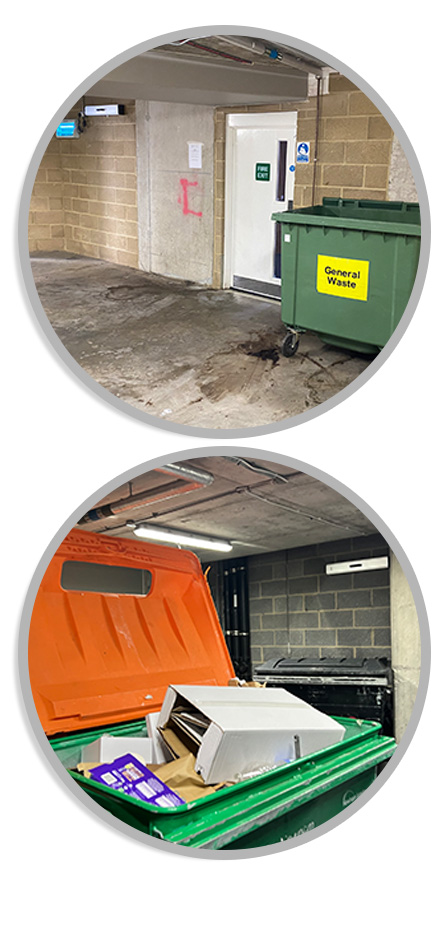
If your bin store or rubbish room constantly smells, you're not alone. Whether in a residential block, commercial premises, or shared facility, waste storage areas are a regular source of complaints. The good news? Persistent odours are avoidable, but only if the real causes are understood and addressed.
Here are the top five reasons bin stores smell, no matter how often they're cleaned, and what you can do to fix it for good.
1. Bacteria and organic breakdown
The most common cause of bin store odours is bacteria breaking down organic waste. As food scraps, packaging residue, or nappies begin to decompose, they release gases like ammonia, hydrogen sulphide, and other volatile organic compounds (VOCs). These smells are difficult to remove and tend to build up quickly in enclosed areas.
What to do: Routine cleaning helps, but the source of the smell is in the air itself. Long-term control requires managing both surface waste and the gases released into the air.
2. Poor air movement and trapped humidity
In many bin stores, airflow is minimal and moisture builds up easily. This creates the ideal conditions for odours to concentrate and for bacteria to multiply, especially in warm weather or where bins are left open.
What to do: Improving airflow can help reduce buildup, but additional control is often needed to manage airborne contamination more effectively.
3. Overflowing or improperly sealed waste
When waste is left exposed, whether from open bags, full bins, or missed collections, decomposition speeds up and odours intensify. These conditions also attract flies and pests, which create further hygiene concerns.
What to do: Good bin management is essential, but even well-maintained stores can develop smells without ongoing control of the air quality.
4. Ventilation that moves the problem, but doesn’t fix it
Ventilation and air changes are commonly used to manage indoor air, but in bin stores they often fall short. Rather than neutralising odours, ventilation can simply move them from one space to another, especially in connected areas like residential corridors or underground car parks.
What to do: Ventilation is important, but should be supported by solutions that deal with the air itself, not just move it around.
5. Fragrances that try to mask odours often make the air more unpleasant
When odours are persistent, some sites rely on chemical sprays or fragrances to cover the smell. But instead of improving the air, this often creates a heavy, artificial scent that mixes with the waste odour, making things worse rather than better.
What to do: Masking smells doesn’t fix the source. To create a fresher environment, the cause of the odour needs to be broken down, not disguised.
A long-term solution that works
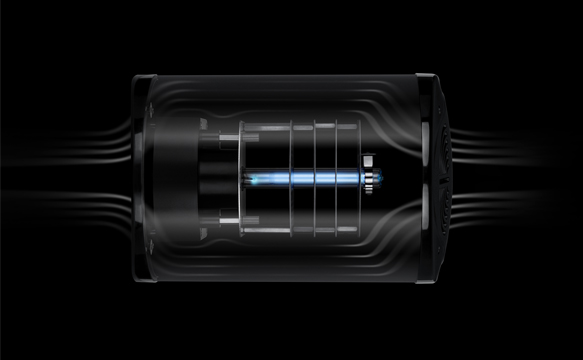
For a growing number of housing providers, facilities managers, and commercial premises, AIRsteril offers a proven solution to bin store odour. By treating the air already present in the space, AIRsteril technology:
• Breaks down unpleasant gases and VOCs
• Reduces bacteria and mould that contribute to poor air quality
• Operates continuously and quietly without relying on filters or chemicals
The result is a cleaner, more pleasant environment with lasting odour control, improved hygiene, and reduced management effort.