The problem with fragrance units in commercial washrooms
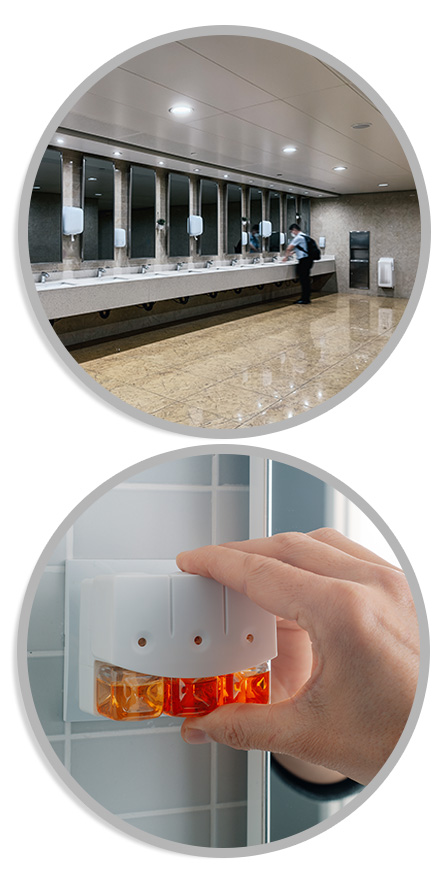
Fragranced sprays and automated scent dispensers may seem like a quick solution in busy washrooms, but they often make the situation worse. They attempt to mask odours by introducing strong artificial scents. Unfortunately, the result can be a more unpleasant stale urine smell combined with an overwhelming chemical aroma, creating an environment that feels oppressive rather than fresh.
1. Attempting to mask, not eliminate
These products do not neutralise odours. They try to hide unpleasant smells with artificial fragrances. However, the combination of the original odour and the added scent often creates a more unpleasant, pervasive chemical.
2. Health concerns from chemical exposure
Many scent products release volatile organic compounds (VOCs) such as ethanol, propan2ol, synthetic aldehydes and ethers. In enclosed washrooms, these chemicals can irritate eyes and airways, and cause headaches or nausea. Staff and visitors with respiratory issues or chemical sensitivities are particularly vulnerable. Over time, repeated exposure may contribute to skin irritation and chronic respiratory problems.
3. Hidden hygiene risks
Relying on fragrances can lead staff to believe the washroom is clean. In reality, this false sense of cleanliness allows bacteria, mould and waste residue to accumulate. The underlying hygiene issues remain unaddressed and may even worsen, masked by the scent.
4. Operational inefficiency and inconsistencies
Fragrance units require regular refilling, battery maintenance or service checks. Without properly maintained schedules, units may be empty, leaking or dispensing too much fragrance. This not only increases costs and staff workload but also undermines hygiene and user confidence.
5. Unsustainable environmental impact
Disposable cartridges, plastic casings and aerosol recalls contribute significantly to landfill waste. Air fresheners also release VOCs into the environment. For facilities focused on sustainability, these singleuse products are misaligned with ecoresponsible goals.
6. A more effective solution: genuine air treatment
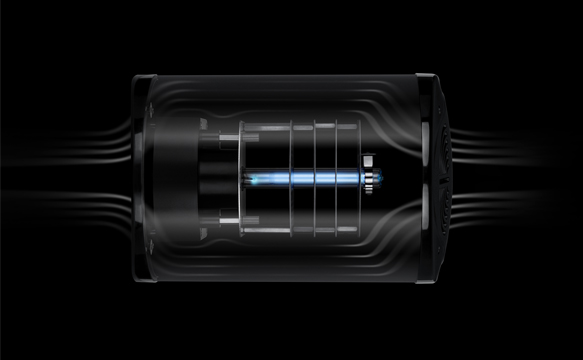
AIRsteril units deliver a more reliable and responsible alternative. Without using fragrances or frequent consumables, they:
• Purify air continuously, targeting bacteria, viruses, mould and odourcausing compounds
• Operate with minimal maintenance, typically requiring just an annual lamp change
• Improve hygiene by treating air rather than masking smells
• Build user trust by providing a consistently clean environment in hightraffic washrooms
Final word: hygiene matters more than fragrance
Commercial washrooms need more than a pleasant scent. Fragrance units may appear to make facilities smell clean, but they risk hiding signs of poor hygiene and potentially worsening the user experience. For longterm odour control, health, and sustainability, it makes sense to choose proven air cleaning systems that address the root of the problem.