Comparing air purification technologies – what to use and when
Air purification systems vary widely in how they function and what problems they are best positioned to address. While many are marketed as all-in-one solutions, each has specific limitations. Understanding the differences between technologies is essential when selecting a system for odour control, hygiene improvement, or particulate reduction.
This guide outlines several commonly used or emerging technologies, helping clarify where each may be applicable, and where it may not.
Technology overview
HEPA filters
• Commonly used to remove airborne dust, pollen, and other particulates.
• Can trap some bacteria but do not destroy microorganisms or reduce odours or VOCs.
• Filters lose efficiency as they become clogged and require regular replacement, increasing ongoing costs.
Ionisers and electrostatic systems
• May assist in settling airborne particles locally by charging them to stick to surfaces.
• Not suitable for broad microbial or odour control.
• Reach and performance depend heavily on unit design; typically not a primary hygiene solution.
Ozone generators
• High-output ozone systems may be used for odour or microbial reduction in unoccupied areas, but effectiveness is only achieved under specific, controlled conditions.
• Not appropriate for use in occupied spaces due to safety limitations.
• Low-output systems are often used to mask odours in enclosed spaces but do not significantly impact airborne hygiene.
Fogging and hydrogen peroxide vapour
• Used for periodic deep cleaning of unoccupied rooms.
• May be effective when correctly applied, but requires trained operators, downtime, and removal of food, sensitive materials, and people.
• Not a practical option for regular use or in spaces with constant access needs.
UV-C (254 nm)
• Can be used to reduce airborne microorganisms in enclosed air-handling units.
• No effect on odours or VOCs.
• Effectiveness depends on exposure design; direct exposure is not safe for occupied spaces.
Far-UVC (222 nm)
• Being explored for overhead disinfection in occupied areas.
• Current use limited to test environments due to safety validation and exposure regulations still in development.
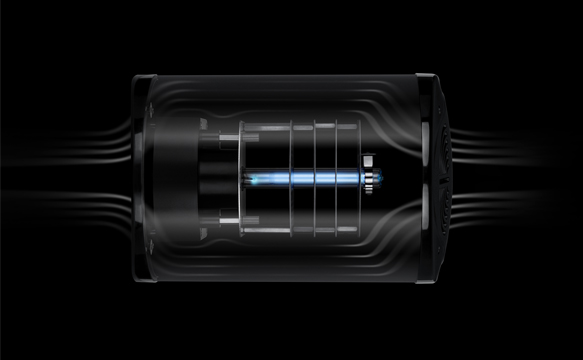
Active air cleaning (e.g. AIRsteril)
• Designed to treat the air already present in occupied environments.
• Targets odours, bacteria, viruses, mould, and VOCs continuously.
• Does not rely on airflow through a unit or frequent manual intervention.
• Used in washrooms, care homes, workspaces, education, healthcare, vehicles and food or waste processing sectors.
Selecting the right approach
When choosing a system, it is important to consider:
• What is the main concern: odours, hygiene risks, particulates, or a combination?
• Will the space be occupied during treatment?
• What are the long-term maintenance and operational costs?
• Is the solution supported by independent or real-world evidence?
No single technology is right for every application. Understanding the limitations and appropriate use of each system is essential in making informed decisions and avoiding ineffective or inappropriate solutions.